
<?xml version="1.0" encoding="UTF-8"?>
<rss version="2.0"
	xmlns:content="http://purl.org/rss/1.0/modules/content/"
	xmlns:wfw="http://wellformedweb.org/CommentAPI/"
	xmlns:dc="http://purl.org/dc/elements/1.1/"
	xmlns:atom="http://www.w3.org/2005/Atom"
	xmlns:sy="http://purl.org/rss/1.0/modules/syndication/"
	xmlns:slash="http://purl.org/rss/1.0/modules/slash/"
	>

<channel>
	<title>News From the Tributaries</title>
	<atom:link href="http://winooskiriver.org/news/?feed=rss2" rel="self" type="application/rss+xml" />
	<link>http://winooskiriver.org/news</link>
	<description>Just another WordPress weblog</description>
	<lastBuildDate>Sat, 07 May 2011 01:00:51 +0000</lastBuildDate>
	<generator>http://wordpress.org/?v=2.9.2</generator>
	<language>en</language>
	<sy:updatePeriod>hourly</sy:updatePeriod>
	<sy:updateFrequency>1</sy:updateFrequency>
			<item>
		<title>Whiteside Property Updates From The North Branch</title>
		<link>http://winooskiriver.org/news/?p=23</link>
		<comments>http://winooskiriver.org/news/?p=23#comments</comments>
		<pubDate>Sat, 07 May 2011 00:58:41 +0000</pubDate>
		<dc:creator>admin</dc:creator>
				<category><![CDATA[Uncategorized]]></category>

		<guid isPermaLink="false">http://winooskiriver.org/news/?p=23</guid>
		<description><![CDATA[On a recent winter Sunday a dedicated group of Middlesex-Worcester residents snow shoed on the recently-protected Whiteside property, conserved by the Vermont River Conservancy. ]]></description>
			<content:encoded><![CDATA[<p>On a recent winter Sunday a dedicated group of Middlesex-Worcester residents snow shoed on the recently-protected Whiteside property, conserved by the Vermont River Conservancy.  During the hike the group saw many coyote tracks and had an excellent time observing a snow-white snowshoe hare who was convinced that his coloration provided him complete camouflage from the group.</p>
<p>The Whiteside property boasts nearly a mile of frontage on the North Branch, and is highly visible along Route 12, where it straddles the Worcester-Middlesex town line. Funding for the purchase of 69 acres of land, with a river corridor easement protecting an additional 18 acres, came from the Vermont Housing and Conservation Board, Vermont Department of Environmental Conservation, and donations from more than 70 local residents.</p>
<p>Following the hike Steve Libby and Mark McEathron led a meeting for VRC discussing the process that they will use as they begin to write their management plan for the property. The plan will seek to balance habitat protection and public access, under the necessity of allowing natural river processes and corridor changes to occur over time. The prior owner of the property, Anna Whiteside, retained ownership of approximately twenty acres at the south end of this larger parcel, although almost all of it is covered by the conservation easement. During the conversation it was noted that the Army Corp of Engineers had channeled the river in the 1930s in an attempt to straighten it, and as a result, large berms were left which are still visible today. Also discussed was whether to do active or passive stabilization or restoration, and that the North Branch Corridor study would be used.</p>
<p>Recreational access for kayaks, canoes, swimmers and walkers were also discussed. There is a problem with parking next to Route 12. The discussion was followed by a pot luck dinner and the promise of additional input into the management plan.</p>
]]></content:encoded>
			<wfw:commentRss>http://winooskiriver.org/news/?feed=rss2&amp;p=23</wfw:commentRss>
		<slash:comments>0</slash:comments>
		</item>
		<item>
		<title>Potash Brook Watershed Rain Barrel Workshop May 19</title>
		<link>http://winooskiriver.org/news/?p=19</link>
		<comments>http://winooskiriver.org/news/?p=19#comments</comments>
		<pubDate>Sun, 24 Apr 2011 01:39:19 +0000</pubDate>
		<dc:creator>admin</dc:creator>
				<category><![CDATA[Uncategorized]]></category>

		<guid isPermaLink="false">http://winooskiriver.org/news/?p=19</guid>
		<description><![CDATA[On May 19, the Winooski Natural Resources Conservation District (WNRCD), in partnership with the City of South Burlington and the Agency of Natural Resources, will host a Build Your Own Rain Barrel Workshop at the South Burlington Department of Public Works building located at 104 Landfill Road (off of Patchen Road).  Participants will learn [...]]]></description>
			<content:encoded><![CDATA[<p>On May 19, the <a href=" http://www.vacd.org/~winooski/">Winooski Natural Resources Conservation District</a> (WNRCD), in partnership with the City of South Burlington and the Agency of Natural Resources, will host a Build Your Own Rain Barrel Workshop at the South Burlington Department of Public Works building located at 104 Landfill Road (off of Patchen Road).  Participants will learn about stormwater issues in Lake Champlain and will have the opportunity to construct their very own rain barrel.  The cost of the workshop is $25 and includes the barrel, fittings, and all necessary tools.  Barrels like this typically retail for over $100.  This is an open workshop however priority will be given to residents in the Potash Brook Watershed.  Participation will be limited to the first 30 who respond.  To signup, contact Justin Kenney at 802-828-4493 x113 or <a href="mailto://justin.kenney@vt.nacdnet.net">justin.kenney@vt.nacdnet.net</a>.</p>
]]></content:encoded>
			<wfw:commentRss>http://winooskiriver.org/news/?feed=rss2&amp;p=19</wfw:commentRss>
		<slash:comments>0</slash:comments>
		</item>
		<item>
		<title>Spring 2011 Mad River Projects</title>
		<link>http://winooskiriver.org/news/?p=17</link>
		<comments>http://winooskiriver.org/news/?p=17#comments</comments>
		<pubDate>Sun, 24 Apr 2011 01:35:12 +0000</pubDate>
		<dc:creator>admin</dc:creator>
				<category><![CDATA[Mad River]]></category>

		<guid isPermaLink="false">http://winooskiriver.org/news/?p=17</guid>
		<description><![CDATA[Mad River Buffer Project
Historically, the Mad River watershed experienced widespread agricultural development.  Today, agriculture continues to be a significant and valued component of the landscape and community.  As is the case in many areas statewide and nationally, along with the agricultural development came alterations and resulting impacts to the riparian zone, including the [...]]]></description>
			<content:encoded><![CDATA[<p><strong>Mad River Buffer Project</strong></p>
<p>Historically, the Mad River watershed experienced widespread agricultural development.  Today, agriculture continues to be a significant and valued component of the landscape and community.  As is the case in many areas statewide and nationally, along with the agricultural development came alterations and resulting impacts to the riparian zone, including the removal of the riparian vegetation along great expanses of the river and major channel alteration (straightening, berming).  While the landscape has changed, there are still many large stretches of the river that lack a healthy, vegetated riparian buffer.  The lack of a forested buffer has resulted in many problems including reduced bank stability, habitat degradation, elevated in-stream temperatures, and deleterious impact to the cold-water fishery.</p>
<p><strong>Japanese Knotweed Poses Problems for Establishing Stream Buffers</strong></p>
<p>In recent decades, invasive Japanese knotweed has colonized vast stretches of the banks of the Mad River, especially in areas where the riparian canopy has been removed.  Knotweed takes advantage of sunny areas, thus is much more prevalent in open stretches of the river.  In these areas it excludes all other plants—the large stands create a virtual wall of knotweed.  Unfortunately, knotweed does not provide the same wildlife habitat benefits and water quality benefits as native plants.  In areas where no knotweed is present, re-establishing a woody riparian buffer can be a passive process:  when landowners stop mowing a riparian area, woody vegetation will eventually return as ecological succession commences.  In areas where knotweed is present, this natural succession process simply cannot happen; new trees are not able to establish themselves.  In these areas, knotweed must be managed in order to establish trees.</p>
<p><strong>A Plan to Restore a Riparian Canopy Along the Mad River</strong></p>
<p>With funding from a Department of Environmental Conservation Watershed grant and technical assistance from The Nature Conservancy, FMR plans to establish a riparian buffer in a knotweed infested area on town land in Waitsfield.  Herbicides will not be used.  Instead, FMR plans to plant a mix of 8-foot tall trees throughout the entire area, and use mechanical cutting to manage knotweed for 3 years after the trees are planted.  By the third year post-planting, the trees will be tall enough to out-compete the knotweed for sun.  As the trees mature, the riparian canopy will be restored in this area.</p>
<p>Some groups use herbicides to deter knotweed before planting trees.  However, this solution is not permanent and may times the knotweed needs to be treated by subsequent pesticide applications.  Also, considering the amount of knotweed in the Mad River watershed, management with herbicides would require the use of large amounts of chemicals—residents and conservationists have expressed concern about this.  An alternative technique for knotweed management is desired, and hopefully this project will demonstrate a viable method.</p>
]]></content:encoded>
			<wfw:commentRss>http://winooskiriver.org/news/?feed=rss2&amp;p=17</wfw:commentRss>
		<slash:comments>0</slash:comments>
		</item>
		<item>
		<title>North Branch Corridor Plan Identifies 92 Possible Restoration Areas</title>
		<link>http://winooskiriver.org/news/?p=12</link>
		<comments>http://winooskiriver.org/news/?p=12#comments</comments>
		<pubDate>Mon, 16 Aug 2010 14:13:19 +0000</pubDate>
		<dc:creator>admin</dc:creator>
				<category><![CDATA[Uncategorized]]></category>

		<guid isPermaLink="false">http://winooskiriver.org/news/?p=12</guid>
		<description><![CDATA[Phase II and Phase III of the North Branch River Corridor study is now complete. The Johnson Company&#8217;s report, prepared for the Central Vermont Regional Planning Commission and the Friends of the Winooski River, have identified sensitive areas of the river in Worcester that need restoration and protection if the North Branch is to sustain its current [...]]]></description>
			<content:encoded><![CDATA[<p>Phase II and Phase III of the North Branch River Corridor study is now complete. The Johnson Company&#8217;s report, prepared for the Central Vermont Regional Planning Commission and the Friends of the Winooski River, have identified sensitive areas of the river in Worcester that need restoration and protection if the North Branch is to sustain its current water quality.</p>
<p>Currently the North Branch drains approximately 78 square miles of watershed. It is considered largely undeveloped and thus poses good opportunities for river corridor restoration. As the Johnson Company report concludes, the goal “is to find the areas within the watershed where a balance can be reached between human investments where development has occurred and the health and well-being of the river system.”</p>
<p>Ninety-two possible projects are proposed in the report of varying significance. Worcester has sixty-five that are rated from low to high priority. Of these the report has fifteen high priority areas on the main stem, three on Worcester Brook, two on Minister Brook and one on Hancock Brook.</p>
<p>The 70 acre Green Crow property was purchased in 2007 by the Vermont River Conservancy through grants and fundraising. This property on the Worcester-Elmore Town line is now under the supervision of the Vermont Department of Forests and Parks.</p>
<p>Late in 2007 the Vermont River Conservancy negotiated the sale of a 1.7 acre parcel on Hancock Brook that is now owned by the town and will remain in its natural state.</p>
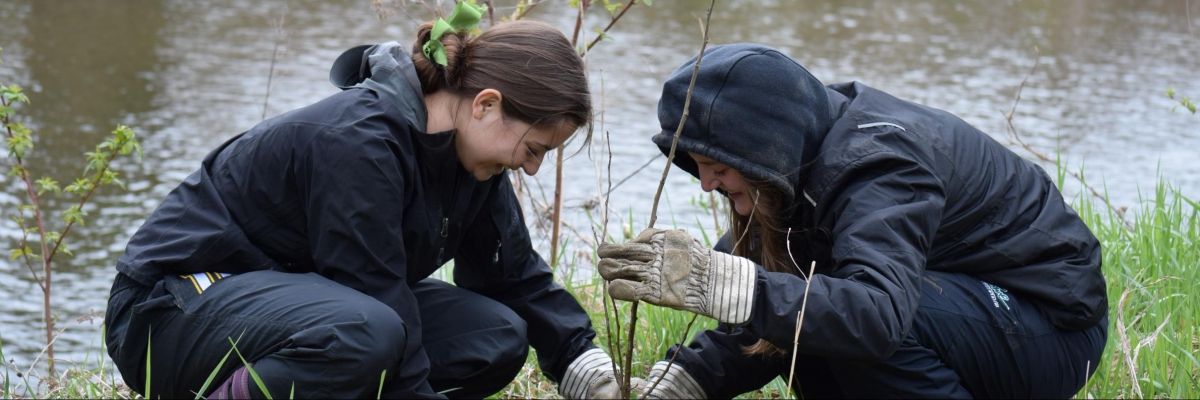
<p>Several riparian tree and brush plantings have taken place in Worcester in the last year. Three of these have been on the main stem and one on Worcester Brook with the design being to stabilize the river banks where an “incised reach” is noted. A number of Worcester residents have participated in these projects.</p>
<p>Just this month, with the assistance of the state flood management team, a meeting was held at the Town Hall for property owners whose property was identified as within the 100 year flood plain to explain flood insurance, development constraints, and protective measures.</p>
<p>The 2009-10 Legislature passed House Bill 763 “River Corridor Protection.” This bill requires the state to help cities and towns adopt local river corridor protection regulations in order to keep our rivers and streams clean, stable and insulated from flood damage. We don’t yet know how this will affect Worcester.</p>
<p>The Vermont River Conservancy<span style="color: #1f497d;"> <span style="color: #000000;">is presently raising funds to acquire an especially important 83 acre parcel on the North Branch of the Winooski River that supports and abundance of wildlife.  VRC is also looking upstream to conserve many swimming holes, waterfalls, white water kayak runs and pristine riparian woodlands further up in the watershed.  All support is welcome.   To find out more, look up VRC at www.vermontriverconservancy.org or call us at 802-229-0820.</span></span></p>
<p>The North Branch is an incredible natural resource but it is subject to abuse unless measures are taken to protect it. If you would like more information about protection and restoration, feel free to contact:</p>
<p>The Vermont River Conservancy<br />
29 Main Street, Suite 11, Montpelier, VT 05602<br />
Email: <a href="mailto:vrc@vermontriverconservancy.org">vrc@vermontriverconservancy.org</a><br />
Website: <a href="http://www.vermontriverconservancy.org/">http://www.vermontriverconservancy.org/</a></p>
<p>Ann Smith, Executive Director, Friends of the Winooski River<br />
PO Box 777, Montpelier VT 05601<br />
Phone: 866-683-7197 (Tollfree)<br />
website: <a href="http://www.winooskiriver.org">www.winooskiriver.org/</a></p>
]]></content:encoded>
			<wfw:commentRss>http://winooskiriver.org/news/?feed=rss2&amp;p=12</wfw:commentRss>
		<slash:comments>0</slash:comments>
		</item>
		<item>
		<title>Worcester &#8211; North Branch Flood Hazard Regulations Revised</title>
		<link>http://winooskiriver.org/news/?p=9</link>
		<comments>http://winooskiriver.org/news/?p=9#comments</comments>
		<pubDate>Tue, 11 May 2010 19:45:24 +0000</pubDate>
		<dc:creator>linda.setchell</dc:creator>
				<category><![CDATA[Uncategorized]]></category>

		<guid isPermaLink="false">http://winooskiriver.org/news/?p=9</guid>
		<description><![CDATA[The Worcester Planning Commission and Selectboard passed the revised Flood Hazard Regulations.   The effective date is March 15th and the regulations include the fluvial erosion hazard zone.  There will be a June meeting of owners whose land abuts the river to discuss in more detail and answer questions on the regulations, the [...]]]></description>
			<content:encoded><![CDATA[<p>The Worcester Planning Commission and Selectboard passed the revised Flood Hazard Regulations.   The effective date is March 15th and the regulations include the fluvial erosion hazard zone.  There will be a June meeting of owners whose land abuts the river to discuss in more detail and answer questions on the regulations, the maps and the insurance coverage.</p>
]]></content:encoded>
			<wfw:commentRss>http://winooskiriver.org/news/?feed=rss2&amp;p=9</wfw:commentRss>
		<slash:comments>0</slash:comments>
		</item>
		<item>
		<title>Pekin Brook Corridor Planning Nearing Completion</title>
		<link>http://winooskiriver.org/news/?p=6</link>
		<comments>http://winooskiriver.org/news/?p=6#comments</comments>
		<pubDate>Tue, 11 May 2010 19:40:41 +0000</pubDate>
		<dc:creator>linda.setchell</dc:creator>
				<category><![CDATA[Uncategorized]]></category>

		<guid isPermaLink="false">http://winooskiriver.org/news/?p=6</guid>
		<description><![CDATA[In the summer of 2009, Bear Creek Environmental, LLC conducted Phase 2 Geomorphic Assessments as part of a River Corridor Planning (RCP) effort on Pekin Brook in North Calais and on Dugar Brook  (a tributary to Pekin Brook).  The RCP in 2009-2010 was sponsored by the Central Vermont Regional Planning Commission (CVRPC). The [...]]]></description>
			<content:encoded><![CDATA[<p>In the summer of 2009, Bear Creek Environmental, LLC conducted Phase 2 Geomorphic Assessments as part of a River Corridor Planning (RCP) effort on Pekin Brook in North Calais and on Dugar Brook  (a tributary to Pekin Brook).  The RCP in 2009-2010 was sponsored by the Central Vermont Regional Planning Commission (CVRPC). The primary objective of the RCP is to use stream <a href="http://winooskiriver.org/Past_Projects" target="_blank">geomorphic assessment</a> data to identify and prioritize river corridor protection and restoration projects within the Pekin Brook watershed.  The Phase 2 Assessment was an extension of a Phase 2 Assessment in 2007 on the Kingsbury Branch and Pekin Brook, which was conducted by BCE for the Friends of the Winooski River.</p>
<p>Data on the impacts to both the physical and habitat conditions of the stream were collected during the Phase 2 Assessment including but not limited to buffers, erosion, bank armoring, straightening, road encroachment, channel dimensions, and depositional features.  Bridge and culvert data were collected by BCE to identify structures that have the potential to fail because of channel adjustments, are having a geomorphic impact on the stream, or are impeding aquatic organism passage.</p>
<p>This year&#8217;s spring planting in Calais is repairing some of the damage found during the corridor assessment work that was done last summer.</p>
]]></content:encoded>
			<wfw:commentRss>http://winooskiriver.org/news/?feed=rss2&amp;p=6</wfw:commentRss>
		<slash:comments>0</slash:comments>
		</item>
		<item>
		<title>Plant a Tree for the Mad River May 7 &amp; 8</title>
		<link>http://winooskiriver.org/news/?p=1</link>
		<comments>http://winooskiriver.org/news/?p=1#comments</comments>
		<pubDate>Mon, 03 May 2010 13:11:29 +0000</pubDate>
		<dc:creator>admin</dc:creator>
				<category><![CDATA[Uncategorized]]></category>

		<guid isPermaLink="false">http://winooskiriver.webventions.com/news/?p=1</guid>
		<description><![CDATA[Friends of the Mad River is coordinating a riparian restoration project on the Mad River at the Kingsbury Farm. Help plant over 600 native trees and shrubs.]]></description>
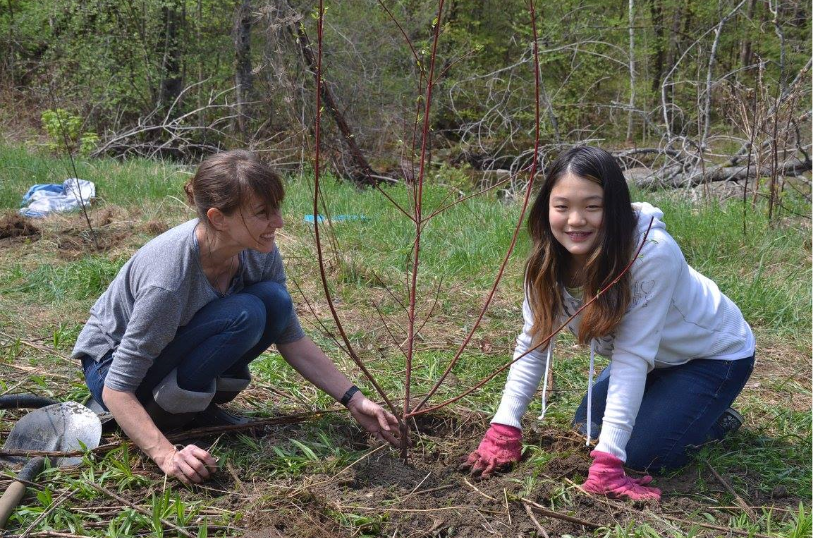
			<content:encoded><![CDATA[<div>Join us May 7th from 4pm-7pm or May 8th from 10am-1pm and Plant and Tree (or plant 10!) at the Kingsbury Farm in Warren! FMR is coordinating the riparian restoration Project, where more than 600 native trees and shrubs will be planted along the Mad River at the Kingsbury Farm. The trees and shrubs will provide a myriad of habitat and water quality benefits. Visit the <a href="http://www.friendsofthemadriver.org/" target="_blank">Friends of the Mad River website</a> for details.</div>
]]></content:encoded>
			<wfw:commentRss>http://winooskiriver.org/news/?feed=rss2&amp;p=1</wfw:commentRss>
		<slash:comments>0</slash:comments>
		</item>
	</channel>
</rss>